
Gemini or Claude
Antigravity
I have made a couple of Web Apps using Antigravity from Google. It is the Agentic Development Environment ADE from Google and I liked it. It did the jobs for me and the apps worked great. It even did some of the testing for me with it’s built in Chrome Browser. It spins it up and clicks and pokes around in the web app to test what it has done and fixes any problems it finds. I still test it myself in another browser, but then I also get the feel of the app and can make changes based on my user experience.
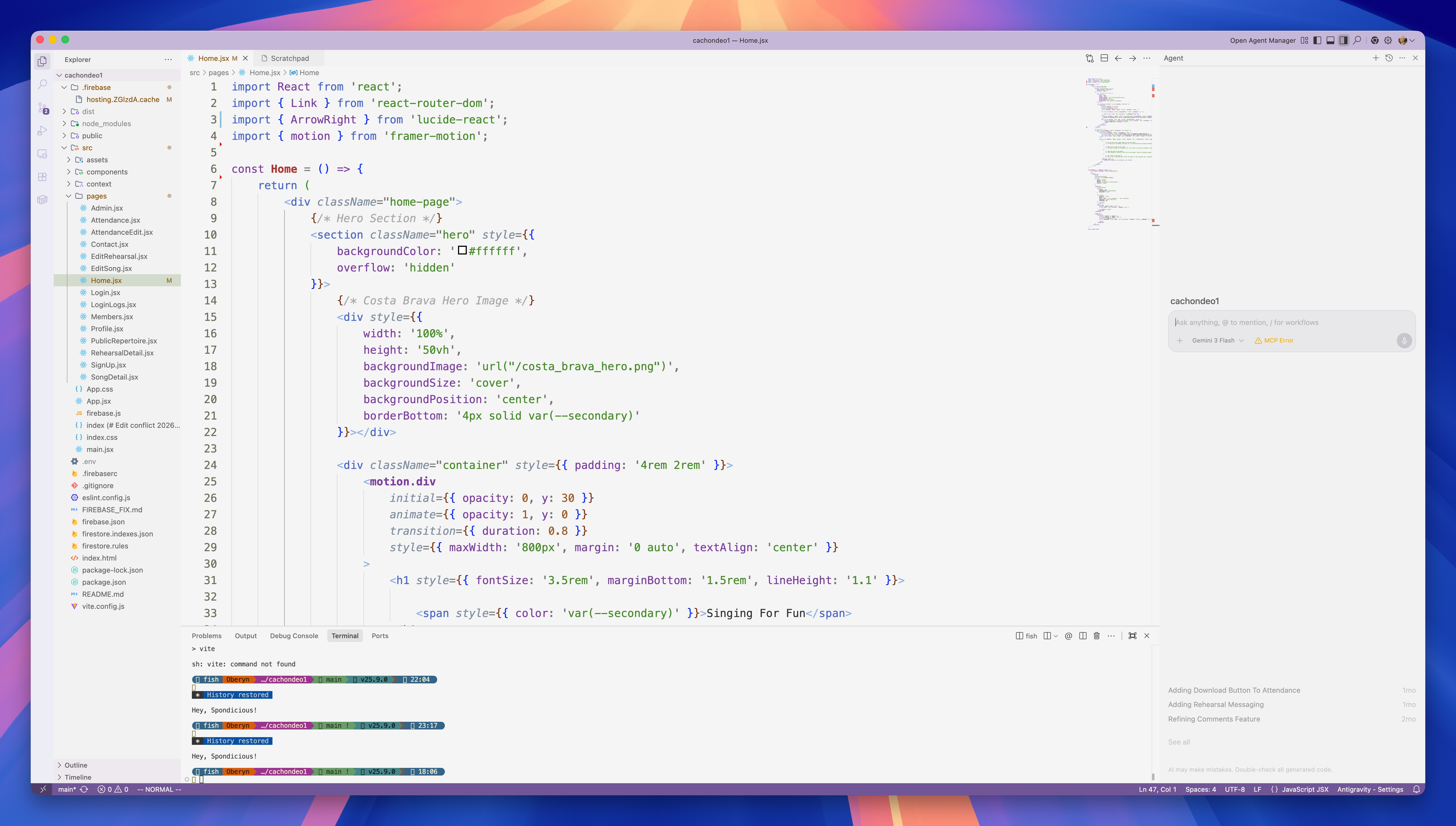
It seems though that most coders tend to go in the direction of Anthropic and Claude. So I thought I should at least look for myself. I did try it a few months back, but didn’t really get very far with it. Something else must have taken my interest away, and eventually I moved in the direction of using Google Gemini. Then Google came up with Gemma4, and I downloaded a couple of those models so I could try out using AI locally with Ollama. I’ve been trying to work out if there’s a way in which I can use these local models for doing some agentic stuff in either Gemini CLI or within Google Antigravity. I don’t seem to have had so much success with that. I think mainly it is going to be useful in terms of using the local models to create good prompts and plans, and then use them in the larger model to do the actual coding.
Planning with a local model
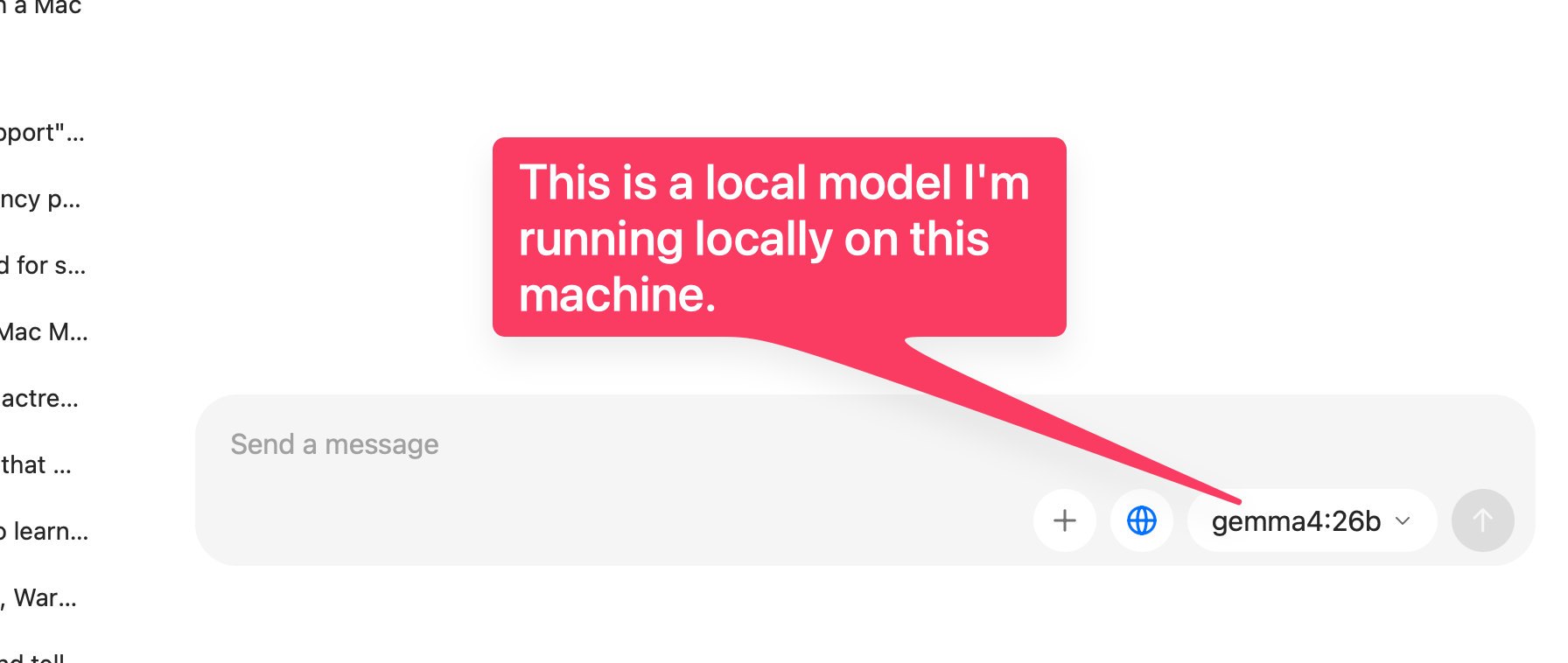
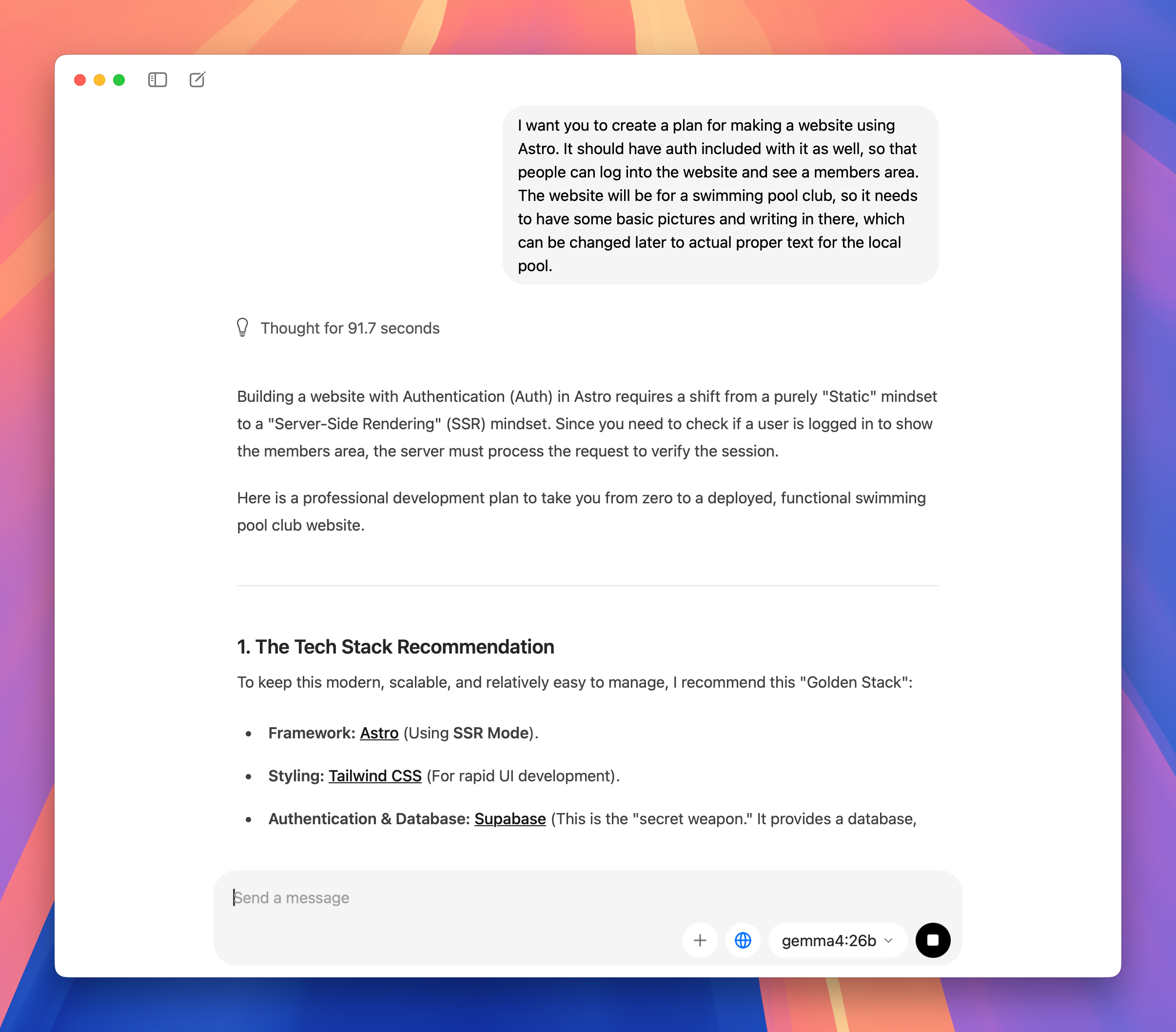
Working with Ollama - I asked it to make a plan for building a website for a local swimming pool. It took it’s time doing it and make the computer run really slow. I was using Gemma4:26b which maybe is too big for this computer and the ram I have available. Weirdly the microphone stopped working too for WisprFlow. On the other computer, I’m running Gemma4:E4b, and it seems to work out a lot better. In the end, I only had to wait a couple of minutes, and once the process had finished, I got the use of the microphone back again. Despite it running very slow and not working that well on the computer, it did come up with a plan in the end which looked fairly good. I could quite easily take that plan and put it into Antigravity, and use a cloud-based model and get some good results. Using Ollama is good for research and planning and asking questions, but it doesn’t do the agentic thing in as much as it doesn’t do any building and creating files or folders or anything like that. You do really need to use an agentic development environment like Antigravity. I was using Warp Terminal, which works in an agentic sort of way for making applications, but I gave up on that because I found it was too expensive. It seemed to use up the credits that you got per month very quickly indeed, and you always had to buy extra tokens to keep on working.
Trying Out Claude
I did try following a tutorial Which used local models with Claude and also brought in free models from OpenRouter. As often happens with these tutorials, it doesn’t quite work out the same as in the tutorial, and you end up getting annoyed and pulling your hair out because you don’t get the same results. I think this guy just missed out a few steps along the way. It’s no wonder I got lost and confused trying to follow it. Basically, what he was saying was using the large cloud models for doing the proper work and using the cheap or the free models for getting ready for the point of the main project being constructed. So once again I didn’t really get a good experience trying out Claude. Considering I’ve had such good success with using Gemini and Antigravity, I shall probably end up sticking with that. I did have to spend $5 on Claude and also $5 on Open Router to get this working. It won’t go to waste, but it would have been nice if I could have got the thing working the same way as in the tutorial. The idea behind the tutorial wasn’t to get cloud models for free; it was basically looking at ways to reduce your costs by as much as possible and still get a good AI experience.
Tried Out Claude Some More
I like the Cowork and Claude seems to be the AI to work with if you are a coder. The Cowork angle is interesting whether you’re a coder or not. So at the moment I’m thinking I’ll go with Claude instead of using Gemini. I mean, Gemini has been great and I got great results using it with some code projects, but maybe Claude has the edge overall. I could work in the command line and keep an eye on the files in another tab in Wezterm, if I’m not using Antigravity. But maybe I can still use but with Claude AI Models???